
What to Check Before a Security Door Installation

A successful security door installation begins well before the installer arrives with the finished product. Measuring, frame condition, handle clearance, access-point planning and product selection all affect how well the door works once it is fitted.
For homeowners across Pakenham, Officer, Beaconsfield and Garfield, it makes more sense to use one practical installation checklist than to treat each nearby suburb as a separate topic. Homes along this corridor include established properties, newer estates and customised entry designs, but the same pre-installation checks apply.
The following guide explains what to inspect, what to ask and what to confirm before manufacture so the finished door is properly specified for the opening.
Review every external access point
Before choosing a product, walk around the property and identify every doorway that gives direct access from outside. Include the front entrance, laundry, garage side door, patio, balcony, courtyard and rear sliding doors. Record which entrances are used most often and which are concealed by fencing, landscaping or the building itself.
A highly visible front door may feel like the obvious first priority, but a side entrance or rear slider that is regularly left open can be just as important. This simple access-point audit helps create a practical installation plan and avoids spending the entire budget on one door while overlooking another.
Inspect the existing frame
A security door depends on the structure around it. Established homes may have timber jambs that have moved, weathered or been repaired over time. Newer homes can have unusual thresholds, narrow fixing zones or trim that changes the available opening. Paint can hide cracks, loose sections and old fixing holes, so the jamb should be checked rather than assumed to be sound.
The installer should measure at several points and check whether the opening is square. Minor variations can often be accommodated through custom manufacture and careful fitting, while more significant deterioration may need repair before the new screen is installed. A standard-sized door should not be forced into an opening simply because the main door is a common nominal size.
Allow for modern entrance hardware
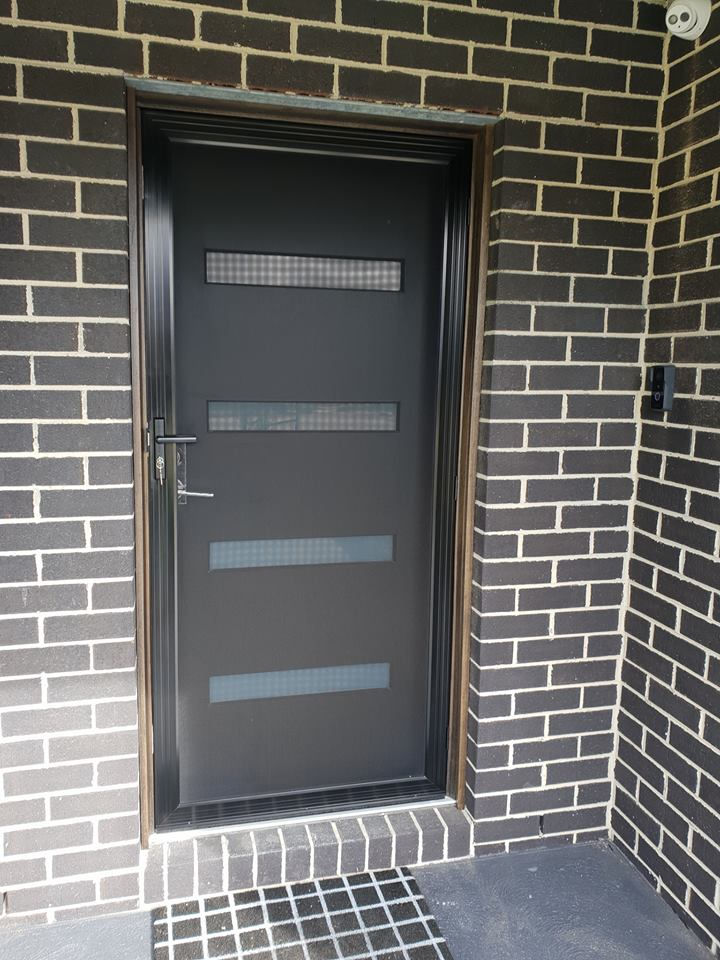
Wide timber doors, pivot doors, double doors, sidelights, smart locks, digital keypads and long pull handles can all affect the security screen design. The screen handle needs enough clearance from the main door hardware, and an outward-opening security door must have room to swing without striking a wall, post, railing or landscaping.
This is particularly relevant in many newer homes around Officer and Pakenham, where contemporary entries can include wide openings and integrated technology. Provide the installer with details of doorbell cameras, intercoms, alarm contacts and electrical wiring near the frame before drilling begins. It is easier to resolve these details during the site measure than after a custom door has been manufactured.
Check the complete security system
Homeowners often focus on mesh because it is the most visible component, but security performance depends on the complete assembly. Ask how the infill is retained in the frame, how many locking points are used, what type of hinges are fitted and how the frame will be fixed to the existing structure. Multi-point locking can secure the door in several locations rather than relying on a single latch point.
AJ’s Doors & Screens Direct security doors are designed to comply with the relevant Australian Standards for security screen doors. A material description such as stainless steel, aluminium or fibreglass does not tell you how the entire door is constructed. The lock, hinges, retention method, frame, fixings and installation all matter.
Balance airflow, privacy and outward visibility
Security screens are often installed so the main solid door can remain open for ventilation. Woven stainless steel mesh generally provides strong airflow and relatively clear outward views. XGuard privacy mesh is available as a front door option where added privacy is important, allowing residents to see out while making it more difficult to see in when exterior lighting is brighter. Diamond grille barrier and decorative door options can suit customers who prefer a grille design or a more traditional façade.
Privacy is affected by lighting, not just mesh type. With XGuard privacy mesh, visibility from outside depends on the lighting conditions: when it is brighter outside, it is difficult to see into the home, but if entry or interior lights are on at night, people outside may be able to see in more easily. Curtains, blinds, landscaping and entry layout should still form part of the privacy plan.
Coordinate the installation across the property
A whole-home plan can use different products for different openings. The front entrance may justify a premium finish that preserves a feature timber door, while a side or laundry entrance may benefit from an easy-clean surface and robust hardware. Sliding doors need compatible tracks, rollers, interlocks and locks rather than a hinged-door solution adapted to a different opening.
If the project will be completed in stages, have several openings measured during the same visit where practical. Keep the colour name, frame profile, handle orientation and product specification on file so future additions remain consistent. This can be useful for households in Pakenham, Officer, Beaconsfield or Garfield that want to upgrade the main entrance first and add rear or side security screens later.
Consider the way the door will be used
High-use doors need hardware that can cope with frequent opening and closing. A laundry door used for bins, washing and pets has different demands from a front door used mainly for visitors. Closers should bring the door to the latch without slamming, hinges should feel stable and handles should be comfortable for the people who use the entrance most often.
Discuss safe exit and internal lock operation before ordering. Avoid improvised padlocks or extra bolts that could make emergency egress confusing. Convenience matters because a difficult door is more likely to be left open.
Prepare the site before installation day
Clear pot plants, furniture and decorative items from around the doorway. Make sure the installer can safely access both sides of the opening. On new builds, complete painting, render, paving and nearby electrical work before the final measure where possible, because changes to finished surfaces can alter dimensions or fixing conditions.
If the property is subject to owners corporation or estate design requirements, confirm whether the external colour or design needs approval before manufacture. If the existing frame needs carpentry work, resolve it before the installation appointment rather than expecting the new screen to conceal the problem.
Inspect the finished work carefully
Once installed, the security door should sit evenly, move freely and close reliably. Check that every locking point engages without pulling the door towards the frame. Look for consistent gaps, secure hinges and a closer that controls the door without slamming. Sliding screens should move smoothly and lock correctly, with tracks free of debris and panels engaging as intended.
Ask the installer to demonstrate normal operation, cleaning, closer adjustment and any approved lock maintenance. Keep product details, keys, warranty information and colour references with the home records. If the door scrapes or becomes difficult to lock shortly after installation, arrange adjustment rather than repeatedly forcing it.
Use the quote as a specification
The best quotes do more than show a total price. They identify the product, dimensions, infill, lock, closer, colour, installation method and warranty, and explain what happens if frame repairs or additional preparation are required. Confirm who will measure and install the door and how follow-up service is handled.
AJ’s Doors & Screens Direct provides customised security door installation across Pakenham, Officer, Beaconsfield, Garfield and nearby areas. An on-site assessment can identify the best configuration, suitable products and any frame or clearance issues before manufacture begins.


Comments